A scientist working in a changing Europe
Galileo Galilei was born in 1564 in Pisa and became a mathematician, natural philosopher, and astronomer. In 1609 he learned of the telescope and built improved instruments of his own. His observations of the Moon, Jupiter’s moons, and the phases of Venus helped challenge the prevailing geocentric model of the cosmos.
In 1610 he published Sidereus Nuncius, reporting several telescopic observations. Scientific debate was tied to institutions, education, religion, and politics; Galileo’s discoveries mattered because they raised questions about how the universe should be described and who had authority to decide.
The 1633 trial
Galileo’s 1632 Dialogue concerning the two chief world systems compared the Ptolemaic and Copernican models. In 1633 the Roman Inquisition tried him, and he was ordered to abjure the view that Earth moves. The sentence prohibited the Dialogue and condemned him to imprisonment; the penalty was later commuted to house arrest.
Historical sources document the proceedings and his later life at Arcetri. The popular story is often compressed into a simple conflict between science and religion, but the record includes a complex mix of evidence, institutional power, personal relationships, and political context.
History versus stage drama
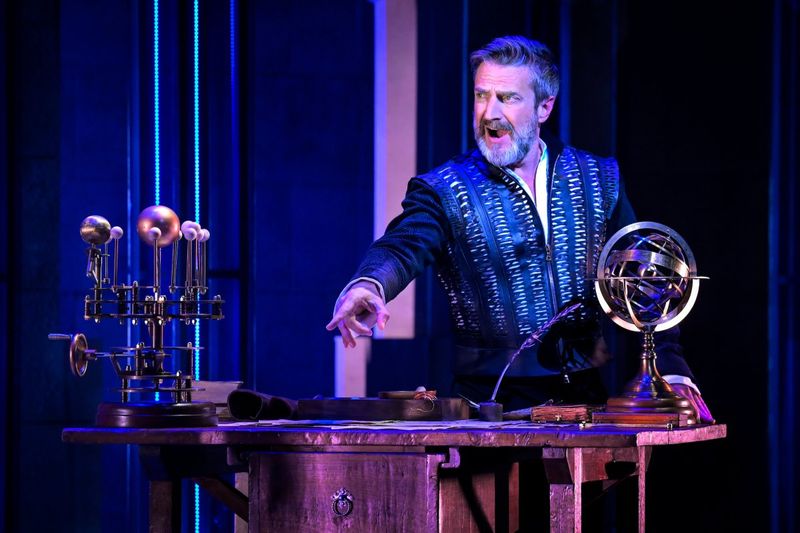
The Broadway musical draws from Galileo’s life, but it is a dramatic work with a book and original score. Scenes, dialogue, relationships, and timing may be shaped for theatre. Treat the musical as a starting point for curiosity, then use historical sources for the details of his life.
For the production’s current cast and performance dates, see Galileo Broadway tickets and schedule.
- Museo Galileo: Galileo’s life and trial ↗
- ETH Zurich: timeline of the trial ↗
- Official Galileo musical site ↗
Production schedules and credits can change. Check official sources for current information.